This is precisely the scientific rigor and research approach we are looking for: starting from a clearly identified clinical need, defining a precise value proposition, building on solid scientific foundations and proposing concrete applications.
Clinical Data Scientist & AI Lead· Casablanca
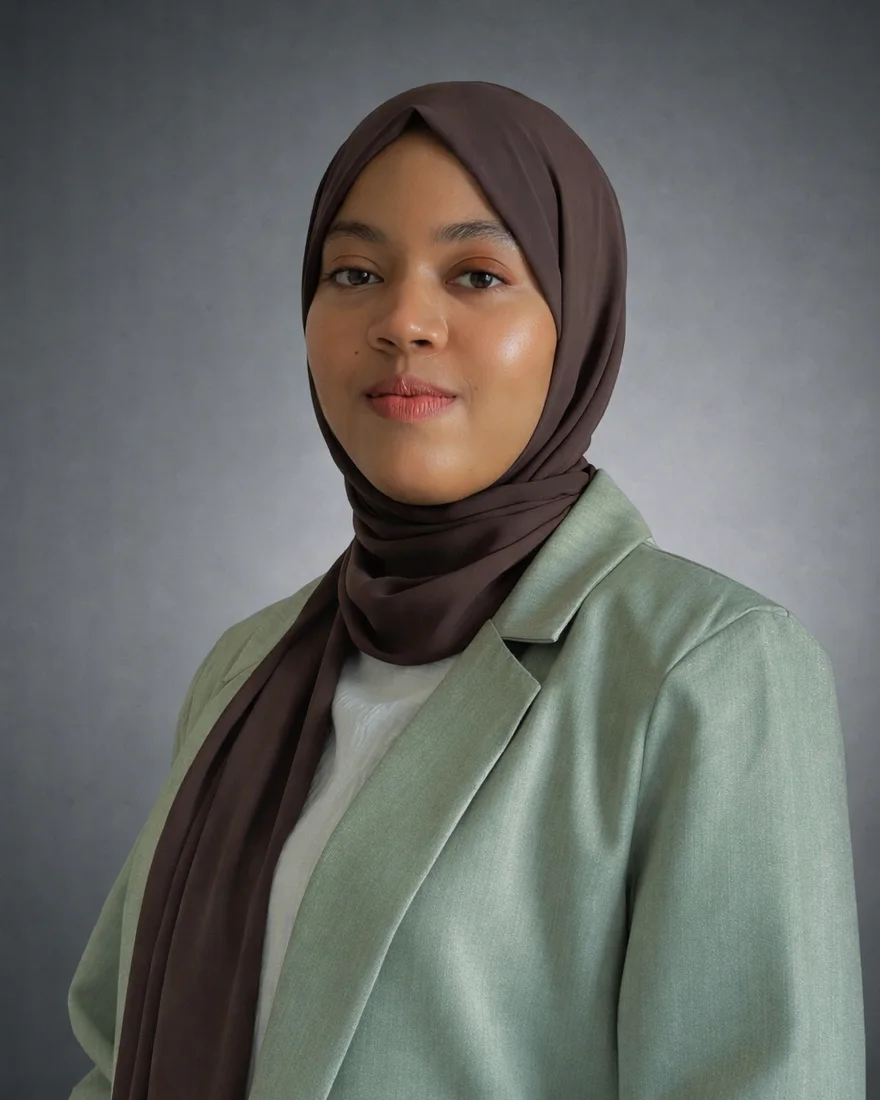
Wassima Manssour
Data science and clinical AI, supporting medical decision-making.
I lead healthcare AI projects alongside medical teams, turning clinical data into decision-support tools that are reliable and easy to understand.

- Akdital
A major healthcare player in Morocco
Leading artificial intelligence projects in cardiology
- Clinical AI
Design and development
Modeling, validation and software integration
- Education
From software engineering to artificial intelligence
3 degrees: technology diploma, professional bachelor’s and master’s at INSEA
- International
International experience and collaborations
France: Henri-Mondor University Hospital United States: LIU and Dassault Systèmes
Where data science meets healthcare.
An artificial intelligence engineer specializing in data science and AI for healthcare, I lead cardiology AI projects at Akdital Innov, in an international collaboration with Long Island University (LIU) and Dassault Systèmes. My responsibilities cover framing needs with medical teams, designing and developing AI solutions, and evaluating them and preparing their integration into clinical settings.
With a master’s degree in Information Systems and Intelligent Systems from the National Institute of Statistics and Applied Economics (INSEA), I have built a path combining software development, business intelligence, data science and research applied to healthcare. In particular, I took part in a collaborative research project bringing together Henri-Mondor University Hospital in Créteil, through the clinical epidemiology and aging research laboratory (CEPIA) of the Mondor Institute for Biomedical Research (IMRB), and the interventional neuropsychology laboratory (NPI) of the École normale supérieure in Paris. This experience deepened my skills in data science, biostatistics and the analysis of clinical and neuroimaging data, in a multidisciplinary research setting.
My mission
Putting data and AI to work for patients and care teams, with reliable, understandable tools that truly support clinical decisions.
Data & AI
From raw clinical data to reliable models: quality, harmonization, deep learning and explainability.
Scientific research
Projects grounded in the state of the art, with results evaluated methodically.
Collaboration
A constant link between clinicians, technical teams and decision-makers.
Three degrees, one cross-functional view.
- 2020
University Diploma of Technology, Computer Application Development
Higher School of Technology · Oujda
Gained
- Software development
- Databases
- Java and .NET
- UML / Merise
- 2021
Professional Bachelor’s, Business Intelligence
Higher School of Technology · Oujda
Gained
- SQL and ETL
- Data warehousing
- Power BI
- Data mining
- 2023
Master’s, Information Systems and Intelligent Systems
INSEA, National Institute of Statistics and Applied Economics · Rabat
Gained
- Machine learning
- Deep learning
- Natural language processing
- Statistical modeling
All in one profile
- Software development
- Databases
- Java and .NET
- UML / Merise
- SQL and ETL
- Data warehousing
- Power BI
- Data mining
- Machine learning
- Deep learning
- Natural language processing
- Statistical modeling
These foundations, put to work.
- CurrentOct 2025 → present
AI & Data Science Engineer · Cardiology track lead
Akdital Innov · Akdital Group Casablanca, Morocco
- Coordinated the cardiology AI track: framing use cases with cardiologists, in close contact with leadership, IT teams and partners.
- Led the development of CardioGuard AI, a cardiology decision-support solution, from the first prototype to validation and deployment preparation.
- Designed and evaluated deep-learning models for diagnosis and prediction support, interpretable by clinicians.
- Structured and enhanced clinical data: quality, anonymization, harmonization and interoperability.
- Deep learning
- Cardiology
- Clinical data
- Interoperability
- Apr → Sep 2023
Biostatistician & Data Scientist
IMRB, Mondor Institute for Biomedical Research · Henri-Mondor University Hospital Créteil, France
- Harmonized and quality-checked a cohort of 35 clinical and neuropsychological datasets.
- Ran multivariable analyses in STATA to identify risk factors of understated cognitive impairment (UCI).
- Extracted brain markers from MRI (FreeSurfer) and built a random-forest classifier (UCI vs non-UCI).
- Worked in a multidisciplinary team of neuropsychologists, biostatisticians and epidemiologists.
- Biostatistics
- STATA
- R
- Python
- FreeSurfer
- Apr → Jun 2021
Data Analyst & Full-Stack Developer
Manahij Conseil Tangier, Morocco
- Gathered business requirements and built a web application for managing e-suggestions (AngularJS, Spring Boot, PostgreSQL).
- Designed a Power BI dashboard tracking each department’s key indicators.
- Power BI
- SQL
- AngularJS
- Spring Boot
- EarlierSoftware development internships (2019–2020): desktop management applications (JavaFX, VB.NET, MySQL, SQL Server).
Professional perspectives
A few pieces of feedback received through my collaborations, presentations and professional exchanges, reflecting different dimensions of my work and approach.
AI and data for healthcare.
CardioGuard AI
Diagnosis and prediction in cardiology
Developed at Akdital Innov, CardioGuard AI is a decision-support solution that brings artificial intelligence to diagnosis and prediction in cardiology, with results clinicians can understand.
- Cardiology
- Diagnosis support
- Prediction
- Explainable AI
CardioGuard AI appears in Akdital’s annual results presentation (March 2026).
View the CardioGuard page (opens in a new tab)Health and clinical research
IMRB · Henri-Mondor Hospital · 2023
Cognitive impairment: risk factors and classification
- The problem
- Understated cognitive impairment (UCI) is hard to detect, and its risk factors are poorly understood.
- The solution
- Harmonized 35 clinical and neuropsychological datasets, ran multivariable analyses to identify risk factors, extracted brain markers from MRI and built a UCI / non-UCI classifier.
Tools and techniques
- STATA
- Biostatistics
- FreeSurfer
- MRI
- Random forest
Chronic disease prediction
- The problem
- Estimating the risk of diabetes, heart disease or Parkinson’s disease early, from a few medical measurements.
- The solution
- One machine-learning model per disease, available in a web app: users enter their data and get a risk estimate.
Tools and techniques
- Python
- Logistic regression
- Streamlit
- Heroku
Parapharmacy sales and inventory
- The problem
- Tracking demand and stock levels to make better restocking decisions.
- The solution
- A dashboard following sales and inventory trends, with pharmaceutical distribution KPIs defined to manage demand.
Tools and techniques
- Power BI
- Power Query
- DAX
- ETL
Student health and performance
- The problem
- Understanding how habits, study methods, personality and health affect the performance of INSEA students.
- The solution
- A survey studied through multiple correspondence analysis, then a prediction model deployed in a web app.
Tools and techniques
- R
- Multiple correspondence analysis
- Python
- Streamlit
A scientific approach applied to AI.
In healthcare, the value of an artificial intelligence model goes beyond its predictive performance. It also rests on its reliability, its clinical relevance and its ability to inform medical decisions.
My method
- 01
Clinical question
Define the need with clinicians: which problem, for which patients, for which decision.
- 02
State of the art
Review the literature: clinical need, added value, existing evidence and real use cases.
- 03
Data
Ensure data quality, harmonization, anonymization and interoperability.
- 04
Modeling and evaluation
Choose the right approach for the problem, then evaluate its performance carefully.
- 05
Clinical feedback
Make results understandable and build clinician feedback into every iteration.
Research interests
- Clinical and cardiovascular AI
- Multimodal AI: signals, imaging, clinical data
- Brain health and neuroimaging
- Explainable and trustworthy AI
- Health data quality and interoperability
What I bring to a team.
Technical skills
AI and machine learning
- Deep learning
- Transfer learning
- Multimodal AI
- Explainable AI
- Computer vision
- NLP
- LLMs
- AI agents
Health data
- Clinical data
- Laboratory data
- ECG
- MRI
- CT
- HIS / PACS
- HL7 / FHIR
- DICOM
- OMOP
- Anonymization
Data and analytics
- SQL
- ETL
- Data modeling
- Data warehousing
- Databricks
- Power BI
Science and statistics
- Biostatistics
- Regression
- Multivariate analysis
- Study design
- Literature review
Engineering and MLOps
- Python
- R
- STATA
- PyTorch
- scikit-learn
- FastAPI
- React
- Docker
- MLflow
- Git
- CI/CD
Soft skills
Clinical communication
Understanding clinicians’ language and turning their needs into technical requirements.
Teamwork
At ease in multidisciplinary teams.
Stakeholder relations
Presenting projects and bringing leadership, technical teams and partners together around shared goals.
Problem solving
Exploring options, alternatives and fallbacks before moving forward.
Ownership
Following a project end to end, from the first prototype to deployment preparation.
Mentoring
Recruiting an intern and supporting her day to day.
Tools: Python, PyTorch, scikit-learn, R, STATA, SQL, Databricks, Power BI, FastAPI, React, Docker, MLflow, Git, FreeSurfer, FHIR, DICOM, OMOP
Continuous learning and upskilling.
Earlier certifications
AI for Medical Diagnosis
DeepLearning.AI · Coursera
Medical AINeural Networks and Deep Learning
DeepLearning.AI · Coursera
Introduction to NLP
OpenClassrooms
Data Science Job Simulation
BCG · customer churn prediction
Power BI Job Simulation
PwC · data analysis
Leadership, built together.
Moving a cross-functional project forward
On the cardiology track, I helped coordinate the work between leadership, cardiologists, IT teams and partners, so we could move toward shared goals together.
Working hand in hand with clinicians
I start from the field: understanding cardiologists’ needs, translating them into data and technical requirements, then validating choices with them.
Across disciplines and countries
In Paris/Créteil, a multidisciplinary research team; in Casablanca, clinicians, engineers and decision-makers. I adapt how I communicate to each of them, to connect their expertise.
- Paris/Créteil, FranceNeuropsychologists, biostatisticians, epidemiologists
- Casablanca, MoroccoCardiologists, engineers, leadership
Growing the team
I took part in recruiting an intern, from screening to interviews, then supported her day to day in her work.
- Screening
- Interviews
- Onboarding
- Mentoring
“My vision is to help build medicine where data and artificial intelligence strengthen the quality of care, support healthcare professionals in their decisions and help improve care pathways and hospital organization, while keeping clinical judgment at the center.”
Get in touch.
A question or a conversation about healthcare AI or research? Feel free to write to me.
wassima.mansssour@gmail.com